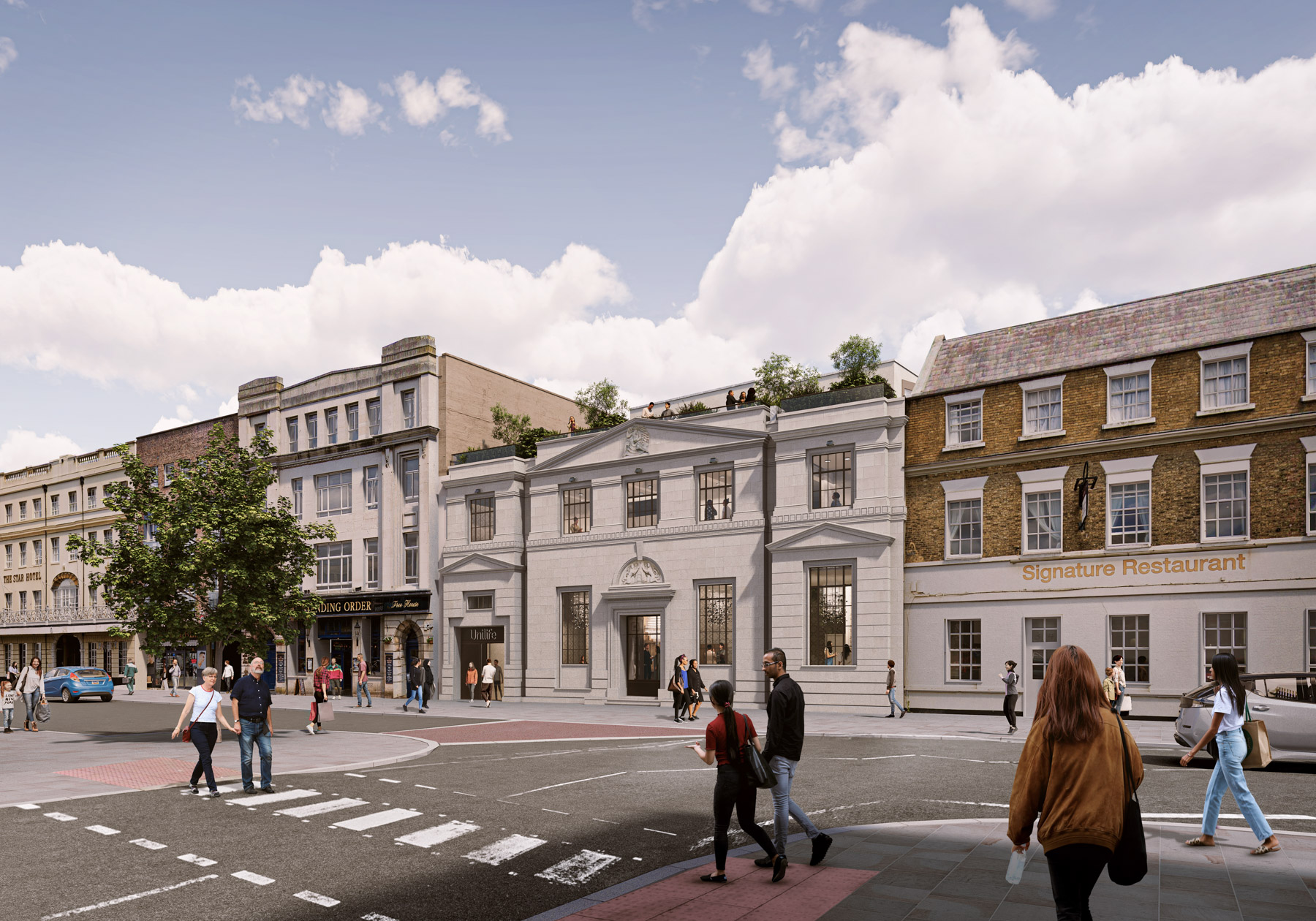
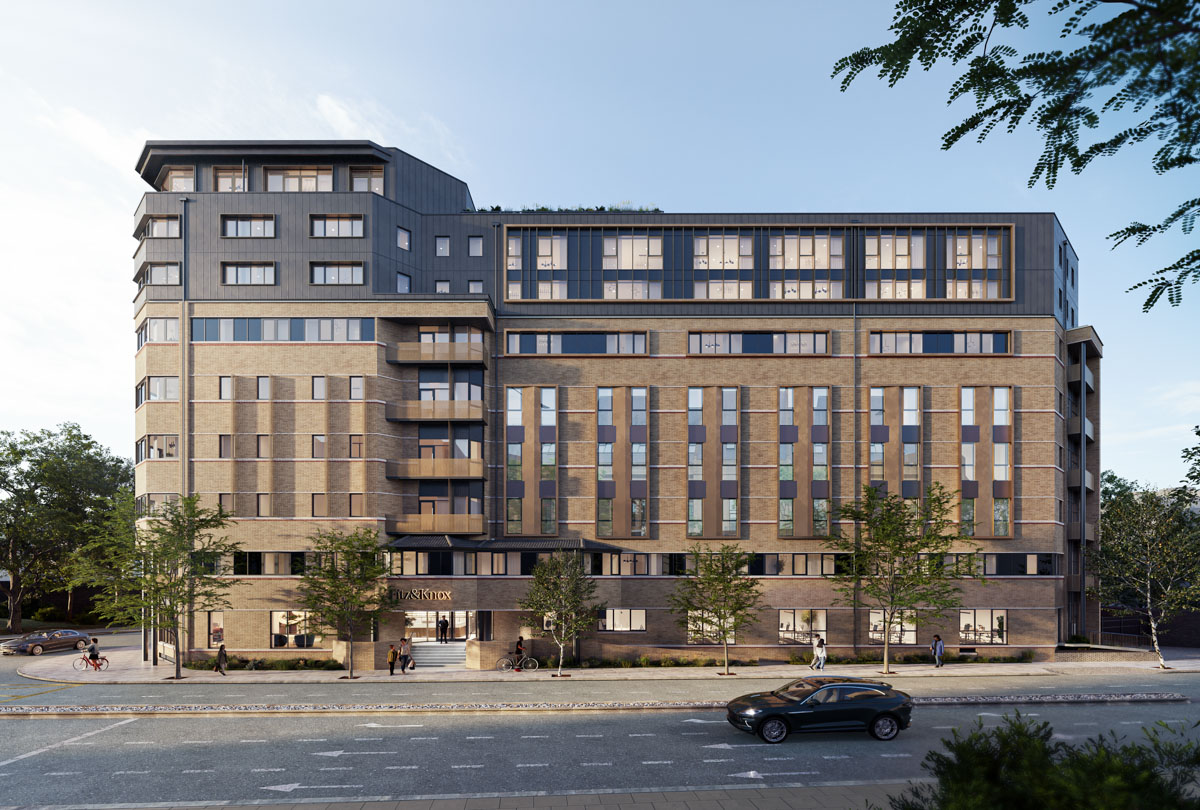
Apex provided transport planning and highways advice to support a full planning application for purpose built student accommodation at 31–33 High Street, Southampton.
The proposals comprised the redevelopment and extension of an existing city centre site to deliver 120 student units, including a five-storey extension to a rear commercial building. The scheme included shared student facilities and was brought forward in a highly accessible city centre location, with no on-site car parking provision.
Apex was appointed by Stelling Properties to prepare transport evidence to support the planning application, with a focus on parking strategy, servicing and deliveries, construction access and the management of student arrivals and departures.
The key transport challenge was to justify a car-free student accommodation scheme in a city centre location, while demonstrating that servicing, refuse collection, construction activity and student arrivals and departures could be managed safely and without adverse impacts on the surrounding highway network.
It was also necessary to demonstrate that suitable arrangements could be put in place to manage peak movements at the start and end of term, without reliance on on-street parking or disruption to local traffic and pedestrian activity.
We prepared a Transport Note to support the planning application, addressing parking strategy, servicing and delivery arrangements, construction access and operational management.
The assessment demonstrated that the highly accessible city centre location, with excellent access to public transport and local services, supported a car-free approach in line with planning policy. The availability of nearby public car parks was reviewed, including provision for disabled parking, and was shown to appropriately meet operational needs without requiring on-site car parking.
Servicing and delivery arrangements were carefully considered, including the access routes and vehicle types expected to serve the site. Swept path analysis was undertaken on the surrounding highway network to confirm that service and construction vehicles could access the site safely and efficiently.
A detailed moving-in and moving-out strategy was prepared to manage student arrivals and departures at the beginning and end of term. This demonstrated that local parking facilities could accommodate short-term demand during these periods, supported by management measures to avoid on-street parking and minimise impacts on the highway network.
The transport assessment confirmed that construction, servicing and operational traffic associated with the development would not result in a severe impact on the operation or safety of the surrounding highway network.

Planning permission was successfully granted on 3 November 2023, with the highway authority satisfied that the car-free student accommodation scheme could operate safely and effectively in transport terms.
The approved development delivers high-quality student accommodation in a sustainable city centre location, supported by a robust servicing strategy, carefully managed student arrivals and departures, and a transport approach aligned with national and local planning policy.