Our advice is grounded in national planning policy and guidance, including the National Planning Policy Framework (NPPF) and National Planning Practice Guidance (NPPG). For planning obligations, we work to the statutory tests under Regulation 122(2) of the Community Infrastructure Levy Regulations 2010: that obligations are necessary to make the development acceptable in planning terms, directly related to the development, and fairly and reasonably related in scale and kind. For planning conditions, we apply the parallel tests in the NPPG, which also require conditions to be relevant to planning and reasonable in all other respects.
For Section 106 agreements under the Town and Country Planning Act 1990, we define the scope, timing and triggers for the transport, highway and drainage matters that need to be secured, ensuring obligations are proportionate, deliverable and aligned with the approved scheme. This includes access and off-site highway works, travel plan measures, monitoring fees (where local policy supports them), the delivery, adoption and long-term management of highway and drainage infrastructure, and implementation phasing.
For planning conditions, we advise on wording and discharge for matters such as site access and highway works, construction management, travel plans, surface water and foul drainage, and site levels, so that requirements are clear, realistic and can be met at the right stage.
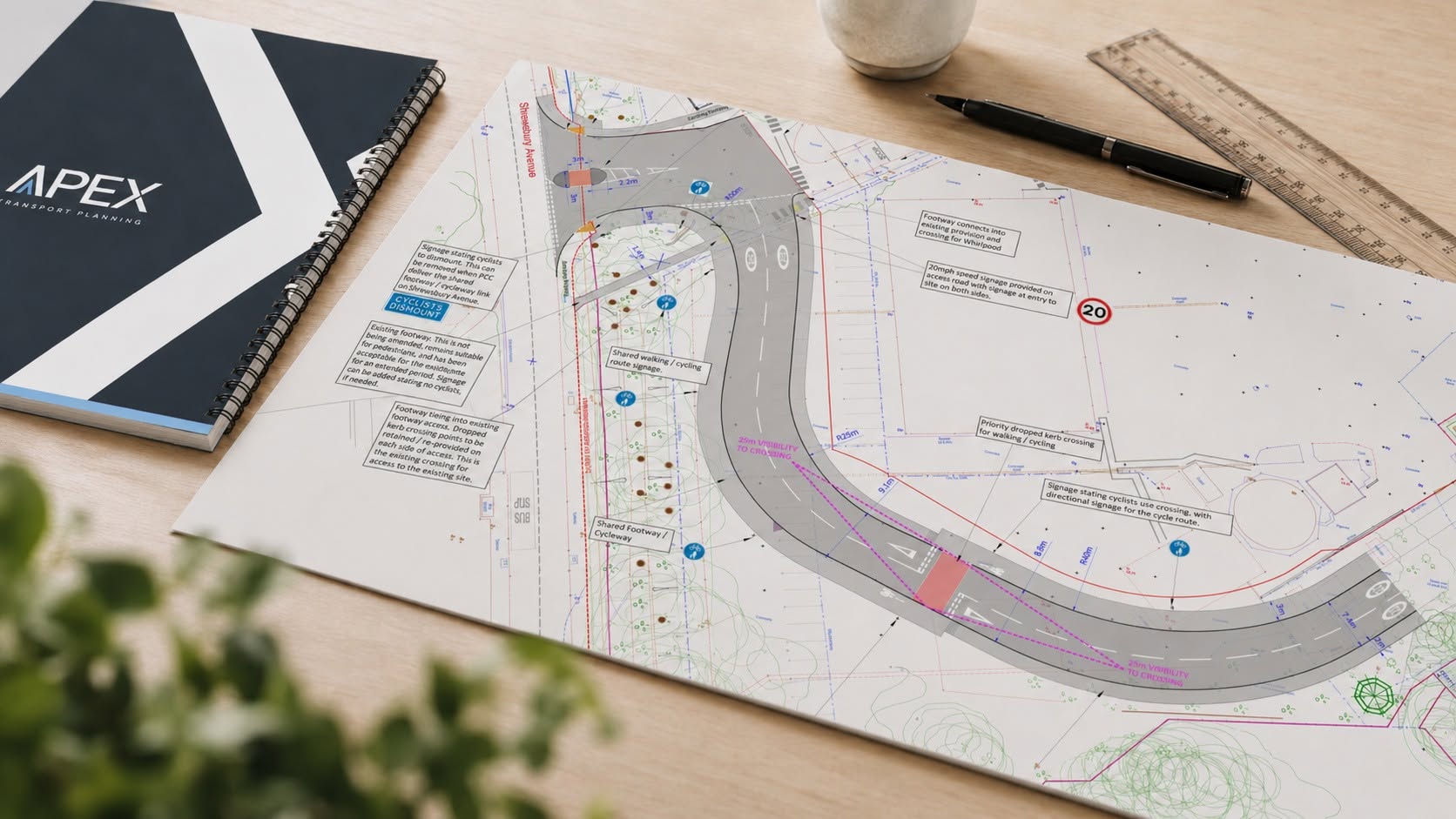
Where obligations or conditions require works to the public highway or the adoption of infrastructure, we take the design through technical approval, including Section 278, Section 38 and Section 104 Agreements (see Off-site highway design and On-site detailed design).
We work proactively with clients, legal teams, planning officers, highway authorities, Lead Local Flood Authorities and water authorities to clarify requirements early, helping to avoid overly onerous conditions, duplication between obligations and unnecessary delay. Our input supports clear wording, realistic triggers and deliverable outcomes that align with the approved development proposals.
 Learn more